Table of Contents
ToggleOEM vs Aftermarket Tractor Parts: What's the Difference and When Does It Matter?
An honest UK guide to genuine, OEM, and aftermarket parts. Which parts are fine as aftermarket, which are worth buying genuine, and how to judge quality before you buy.
The question every tractor owner asks before ordering a part: do I buy genuine or aftermarket? The honest answer is that it depends on which part you are buying. Some components are perfectly good as aftermarket and save you 40% to 60% off the dealer price. Other components are worth buying genuine because the aftermarket alternatives fail earlier, fit poorly, or cause secondary damage. This guide explains the difference, names the parts in each category, and tells you exactly how we decide what to stock at Nick Young Tractor Parts.
We sell both genuine and aftermarket parts. We are not going to pretend everything aftermarket is equal to genuine, because it is not. We are also not going to tell you that genuine is always worth the premium, because on many parts, it is not. What follows is the straightforward version that nobody else in the UK tractor parts trade seems willing to put in writing.
1 What do OEM, genuine, aftermarket and pattern actually mean?
These four terms get used interchangeably, but they mean different things. Getting them straight avoids confusion when ordering.
OEM (Original Equipment Manufacturer) parts are made by the same factory that produced the genuine part, but sold without the tractor maker's branding. Many tractor manufacturers do not make their own filters, bearings, or electrical components. They buy them from specialist suppliers (Bosch, Mahle, SKF, Denso, Mann, and others).
Aftermarket parts are manufactured by third-party companies to fit the same application as the genuine part. Quality varies enormously. The best aftermarket manufacturers (such as Sparex, Bepco, and Granit) invest in engineering, testing, and material quality.
Pattern parts are a subset of aftermarket. The term is common in the UK and means a copy made to the same dimensions as the genuine part, often manufactured using the original design drawings or reverse-engineered from the original.
2 Where aftermarket parts are just as good (and save you money)
For the following part categories, a quality aftermarket or OEM-equivalent part performs identically to genuine in normal agricultural use. The savings are real and the risk is low.
- Oil, fuel and air filters: Filter manufacturers such as Mann, Donaldson, Fleetguard, and Baldwin supply filters to tractor makers as OEM components. The same filter without the tractor maker's label costs 40% to 60% less.
- Gaskets and gasket sets: Aftermarket gasket sets from manufacturers like Elring, Goetze, and Payen use the same multi-layer steel or composite materials as genuine sets.
- Bearings: Tractor manufacturers do not make their own bearings. They buy from SKF, Timken, FAG, NTN, or NSK. Buying under the bearing manufacturer's own part number saves 30% to 50%.
- Seals and O-rings: Standard shaft seals and O-rings from manufacturers like Corteco, NOK, and Trelleborg match genuine specifications and are manufactured to international standards.
- Wear parts: Brake discs, clutch plates, linkage pins and bushes. These items wear out by design and aftermarket equivalents perform identically through their service life.
- Service kits: Oil filters, fuel filters, air filters, and sump plug washers bundled as a 500-hour kit are 40% to 55% cheaper as aftermarket.
Parts and suppliers we recommend
These are the named manufacturers whose aftermarket parts we stock and trust:
3 Where OEM parts are worth the extra cost
For the following part categories, we recommend genuine or OEM-equivalent parts from the original component manufacturer. The price premium buys you reliability, precise calibration, or compatibility that aftermarket alternatives do not consistently match.
- Fuel injectors and injector nozzles: Modern common-rail fuel injectors operate at pressures up to 2,500 bar. Aftermarket alternatives often deliver slightly different spray patterns or flow rates, causing rough running, black smoke, or fault codes.
- Electronic sensors and control modules: An aftermarket temperature sensor that reads 5°C higher than actual triggers a false warning light. Genuine sensors from the original supplier (Bosch, Continental, Hella) are calibrated correctly.
- Hydraulic pump internals: The internal gear tolerances, surface finish, and heat treatment of hydraulic pump components determine flow rate and service life. Aftermarket pump kits reduce output by 10% to 15% and wear out in half the time.
- Turbocharger cartridges: Turbochargers operate at shaft speeds exceeding 100,000 RPM and 700°C exhaust temperatures. Aftermarket turbos with inferior balancing cause oil leaks, shaft play, and premature failure.
- Wiring looms and connectors: Aftermarket looms often use thinner gauge wire or incorrect pin configurations. A loom with one pin in the wrong position causes intermittent faults that take hours to diagnose.
Original component manufacturers we source from
These are the OEM and genuine suppliers we recommend for critical components:
4 How to judge aftermarket parts quality: what to look for
Not all aftermarket parts are equal. Here is how to assess quality before you buy.
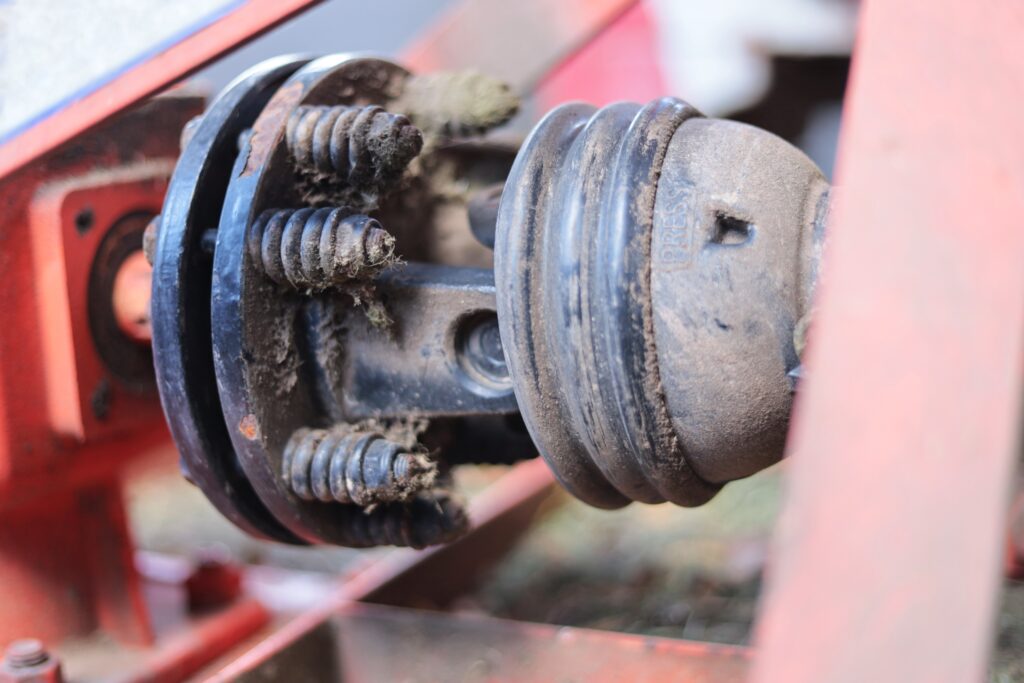
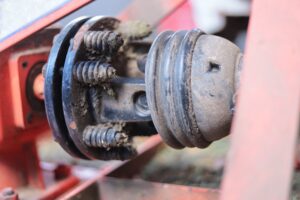
On metal components, the material grade determines strength and wear life. A genuine John Deere PTO shaft is forged from case-hardened steel. A cheap aftermarket copy machined from mild steel looks identical but wears 3 to 4 times faster. Always ask the supplier what material the part is made from.
5 What Nick Young stocks and why
We stock a mix of genuine, OEM-equivalent, and quality aftermarket parts. The decision on what to carry is based on one question: does the aftermarket version perform reliably in the field?
Our stocking philosophy
For filters, gaskets, bearings, seals, wear parts, and service kits, we stock quality aftermarket as standard. The suppliers we use (including Sparex, Bepco, Granit, Mann, and Donaldson) have supplied the UK agricultural parts trade for decades. Their products work, and we back them with our own returns policy.
For fuel injectors, electronic sensors, turbocharger components, hydraulic pump internals, and wiring looms, we supply genuine or OEM-specification parts from the original component manufacturer. We have seen too many tractors come back with aftermarket injectors causing running faults or cheap sensors triggering false alarms.
We cover all major tractor brands: John Deere, Massey Ferguson, Case IH, New Holland, Ford, Fendt, Deutz-Fahr, Kubota, Claas, David Brown, and International Harvester. The same quality criteria apply across every brand.
6 Warranty and returns: what happens if a part is not right
Every part we sell carries a warranty. The coverage depends on the part type and manufacturer.
- Genuine parts carry the manufacturer's warranty (typically 12 months from purchase or installation, whichever comes first). We handle the paperwork.
- Aftermarket parts from our named suppliers carry either the supplier's warranty or our own warranty, whichever is longer. If an aftermarket filter, gasket, bearing, or seal fails within its expected service life due to a manufacturing defect, we replace it.
- Returns within 14 days: If a part does not fit or is not correct for your application, contact us for a full refund or exchange. Electrical components and special-order items are subject to a restocking assessment, but we are reasonable. If we supplied the wrong part, we fix it at our cost.
- Honest feedback: If you buy an aftermarket part from us and it does not perform as well as genuine, tell us. We want to know, because it affects what we stock and recommend to other customers.
Not sure which to buy?
If you are weighing up genuine versus aftermarket for a specific repair, get in touch. We will tell you which option we would choose if it were our own tractor.