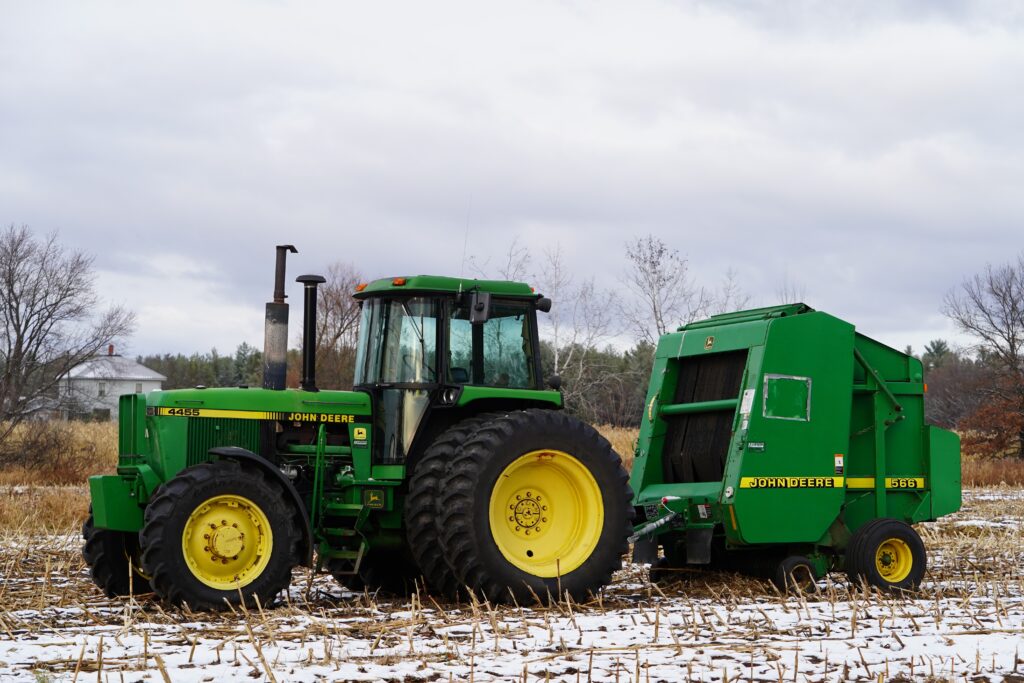
Cold mornings expose weak starting systems on John Deere tractors. Cold weather thickens oil, slows cranking speed, and reduces battery output.
Cold weather also waxes diesel and clogs fuel filters first. This guide splits the problem fast, then points you at the right parts.
Table of Contents
ToggleQuick triage in 120 seconds
Start with a simple split: cranking issue or fueling and preheat issue. Check the key position and watch dash behaviour for voltage drop clues.
Listen for a relay click, a solenoid click, or a starter grind. Watch the rev counter and gauges for flicker or reset. Smell for raw diesel at the exhaust while it cranks. Check the exhaust for smoke while cranking in cold air.

No crank or single click
A single click often points at battery, cables, solenoid, or relay feed. A dead dash often points at battery state or a main connection. A bright dash with a click often points at a starter solenoid issue.
Slow crank
A slow crank often points at low cold cranking amps or high resistance. A slow crank also shows up with a tired starter motor or dragging solenoid. Cold oil magnifies any weakness, so fix the electrical basics first.
Cranks but won’t start
A crank with no start often points at glow plugs or fuel restriction. A crank with white smoke often points at poor preheat or low compression heat. A crank with no smoke often points at fuel not reaching the cylinders.
Nick Young Tractor Parts
Likely causes by symptom
Dash lights dim or drop out
Battery voltage sag causes the dash to dim or reset.
Corroded terminals add resistance and waste power as heat.
A weak earth strap breaks the return path and starves the starter.
A damaged battery lead can look fine and fail under load.
Starter clicks but does not turn
A solenoid click with no crank often signals low current delivery.
The solenoid can stick or burn contacts inside the starter.
A starter relay can click and still fail to pass current.
A worn ignition switch feed can drop voltage to the relay coil.
Turns over slowly then stops
A low battery can start the crank then collapse under load.
A poor cable can heat up and increase resistance mid-crank.
A starter motor with worn brushes can draw high current and stall.
An engine heater or a warm shed often hides this fault in milder weather.
Starts with spray but stalls
Starting fluid masks fuel delivery problems and risks engine damage.
A stall after a brief start often points at restricted fuel flow.
A gelled fuel filter can pass a dribble, then starve the pump.
Water in the separator can freeze and block the outlet.
Parts checklist by system
This section maps symptoms to part categories you can actually buy.
Use your John Deere model and serial number to confirm fitment.
Match the part number where possible, then confirm connectors and mounts.
Parts checklist by system
Nick Young Tractor Parts
Parts checklist by system
Battery and cables
- Check battery capacity, cold cranking amps, and terminal type.
- Check battery leads for corrosion under the insulation at the crimp.
- Check the earth strap from battery to chassis and chassis to engine.
- Check terminal clamps for cracks and loose pinch bolts.
Batteries and battery leads Earth straps and battery terminals
Starter motor and solenoid
- Check starter engagement, cranking speed, and heat at the starter body.
- Check solenoid operation and contact condition.
- Check mounting bolts, because a loose starter can misalign and drag.
Starter motors and starter solenoids
Glow plugs and preheat circuit
- Check glow plug type and voltage rating for your engine variant.
- Check the glow plug controller or timer module if your model uses one.
- Check the preheat relay and fuses feeding the controller.
Glow plugs and glow plug controllers Relays, fuses, and ignition switches
Relays and ignition switch feed
- Check the starter relay, preheat relay, and any safety interlock relay.
- Check fuses for hairline cracks and heat damage at the blades.
- Check ignition switch output voltage under load, not just continuity.
Relays, fuses, and ignition switches
Fuel filters and water separator
- Check the primary and secondary fuel filters for restriction and waxing.
- Check the water separator bowl for ice, sludge, and water line.
- Check filter seals and housings for air leaks that let fuel drain back.
Fuel filters, water separators, and filter housings
Fitment tip: Use your tractor model and serial number to match the right variant before ordering.
Step-by-step checks
Nick Young Tractor Parts
Step-by-step checks
Run these checks in order to save time and avoid guessing.
Use a multimeter, a jump pack, and basic hand tools.
Work safely around batteries, moving parts, and fuel.
Battery voltage and load check
- Measure battery voltage at rest after an overnight sit.
- A healthy battery often sits around 12.6V when fully charged.
- Measure battery voltage while cranking to reveal sag.
- A big drop under crank points at low capacity or a weak cell.
- Charge the battery fully before you condemn the starter motor.
Practical tip: Use a proper load tester if winter starting issues happen often, and compare the CCA rating to your model spec.
Cable drop test and earth strap check
- Voltage drop testing beats guessing, especially with hidden corrosion.
- Measure from battery positive to starter main terminal while cranking.
- A high drop points at the positive lead, clamp, or connection.
- Measure from battery negative to starter casing while cranking.
- A high drop points at earth strap, chassis bond, or engine bond.
- Feel for hot spots at clamps after a short crank attempt.
Common fixes: Replace tired battery leads rather than cleaning the outside only, and replace an old earth strap even if it looks intact.
Starter draw and solenoid behaviour
- Listen for a solid clunk from the solenoid on key start.
- A rapid click often signals voltage collapse at the solenoid coil.
- A single clunk with silence often signals burnt solenoid contacts.
- A slow grind often signals a tired starter motor or poor engagement.
- Check for oil contamination at the starter, which attracts dirt and adds drag.
Decision point: Swap in a known good battery or jump pack to isolate battery weakness, and suspect the starter if crank speed stays slow.
Glow plug resistance and supply voltage
- Glow plugs fail quietly and show up when frost hits.
- Test resistance across each glow plug using the correct meter range.
- Compare readings across cylinders, because one outlier often fails first.
- Check for voltage at the glow plug rail during the preheat cycle.
- Check the glow plug relay and controller output if voltage stays absent.
Symptoms: Cranks strongly but struggles to catch, starts with white smoke then clears, or starts better after cycling preheat twice.
Relay swap test and fuse inspection
- Relays can click and still fail internally at the contacts.
- Swap a same-part-number relay with a non-critical relay as a quick test.
- Inspect fuses for heat marks and loose fuse box grips.
- Check the ignition switch feed if relay coil voltage drops during crank.
- Check safety interlocks like neutral or PTO switches if your model uses them.
Fuel filter restriction and waxed fuel signs
- Cold diesel waxing blocks filters first, before it blocks lines.
- Look for a loss of prime if the tractor sat for days in cold air.
- Check the filter canister for a cloudy, waxy appearance in the fuel.
- Drain the water separator into a clear jar and look for water and ice.
- Replace filters if you see waxing, because heat alone rarely clears a clogged element.
Fuel checks: Confirm winter grade diesel where possible, store fuel clean and dry, and keep the tank fuller to reduce condensation overnight.
Common mistakes that drive wrong diagnoses
Nick Young Tractor Parts
Common mistakes and when to stop
Common mistakes that drive wrong diagnoses
- People blame glow plugs when the battery collapses under load.
- People replace a battery and ignore a corroded earth strap.
- People replace a starter when a burnt relay contact drops voltage.
- People change one fuel filter and leave a blocked second filter in place.
- People use starting spray and hide the underlying issue.
- People skip model and serial checks and order the wrong variant.
When to stop and call for help
- Stop if the starter cables heat fast or show melting insulation.
- Stop if the battery vents, swells, or smells of sulphur.
- Stop if the tractor starts then runs rough with heavy smoke.
- Stop if you suspect a deeper injection or compression issue.
- Call an engineer if you confirm good cranking and good preheat yet it will not fire.
- Call the parts team if you cannot confirm the correct glow plug type or starter fitment.
Fitment matters: Have your model and serial number ready before ordering electrical or fuel system parts.
What to order from Nick Young Tractor Parts
Order based on the symptom path, not on guesswork. Start with the highest-failure, lowest-effort parts in winter conditions. Use your tractor model, serial number, and engine code where available.
Nick Young Tractor Parts
What to order or inspect next (by symptom)
If the dash dims and cranking slows
- Battery terminals and clamps.
- Earth straps and chassis-to-engine ground straps.
- Battery leads and heavy gauge cables.
- Battery with correct CCA for your John Deere model.
If the starter clicks or cranks slowly with a strong battery
- Starter relay and associated fuses.
- Starter solenoid or solenoid contact kit where applicable.
- Starter motor matched to mounting pattern and tooth count.
If it cranks well but will not fire in cold weather
- Glow plugs matched to engine variant and voltage.
- Glow plug controller or timer module if fitted.
- Preheat relay and wiring connectors.
- Primary and secondary fuel filters.
- Water separator service parts and seals.
Fitment tip: Use your tractor model and serial number, plus engine code where available, to match the correct variant.
What we need from you for fast part matching
Send details that reduce returns and downtime.
Send your John Deere model and serial number from the ID plate. Send the engine code if you have it to hand.
Send a clear photo of the old part and its connectors. Send a photo of any stamping, casting number, or label. Send a photo of how the part mounts on the tractor. Send a short video of the start attempt with sound.
Winter prevention checklist for John Deere starting reliability
This section prevents the same fault next frost. Build the habit once and reduce winter downtime.
Electrical prevention. Clean and tighten battery terminals at the start of winter. Replace tired battery leads before they fail under load.
Replace an old earth strap as cheap insurance. Charge the battery regularly if the tractor sits unused. Check alternator output once the tractor runs, to protect the battery.
Preheat prevention. Test glow plug circuit current before the first cold snap.
Replace glow plugs as a set if multiple show weak readings. Inspect glow plug rail connections for corrosion and looseness. Keep relay and fuse contacts clean and seated firmly.
Fuel prevention. Replace fuel filters before winter, not during the first freeze. Drain the water separator routinely and check for water load. Use clean fuel storage and keep caps sealed to reduce moisture. Consider an anti-wax additive if you store fuel in exposed tanks.
Keep the tank fuller overnight to reduce condensation. Operating prevention. Cycle preheat properly and avoid short, repeated cranks. Let the starter cool between attempts to protect windings. Warm the tractor where possible before heavy winter work.
Quick reference symptom map
Use this as a fast decision tool on a frosty morning. Dim dash and slow crank usually points at battery, leads, or earth. Clicking relay and no crank often points at relay contacts or feed voltage. Single solenoid clunk and no crank often points at solenoid contacts or starter.
Strong crank with white smoke often points at glow plugs or preheat control. Strong crank with no smoke often points at fuel filters or loss of prime.